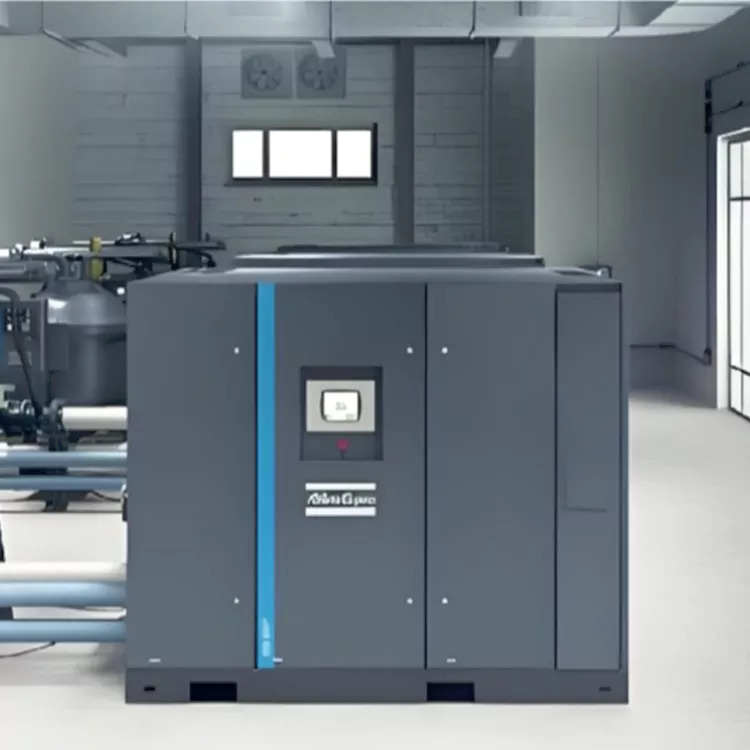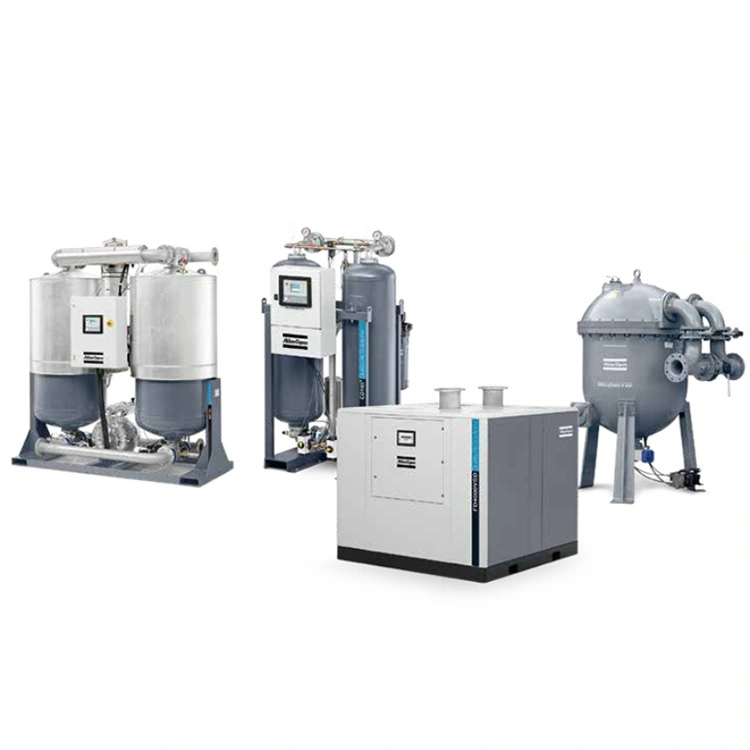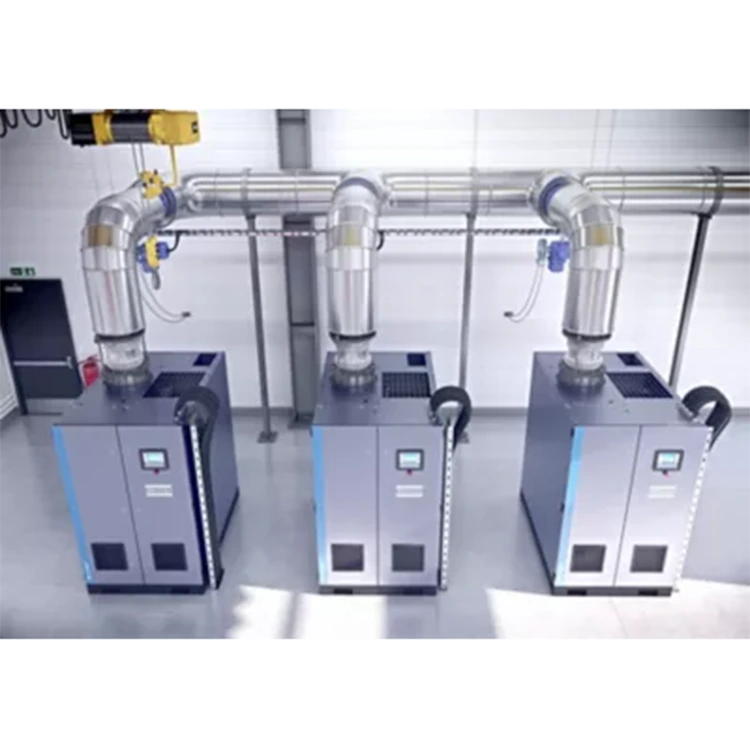
Dry-type oil-free screw compressors are primarily twin-screw compressors. There is no lubrication within the compression chamber; lubricating oil is only present in the gearbox, making them essentially dry.
The rotors have a gap between them and do not contact each other. They have a synchronous gear structure, and torque and positioning are transmitted between the rotors via these synchronous gears.
Both the male and female rotors at the inlet and outlet have shaft seals to separate the gas medium from the lubricating oil.
The rotor surfaces have a special coating. Because they do not contact each other, the initial compression pressure is not very high. To increase the pressure, a two-stage compression process is used.
Isothermal compression is ideal for compression, but this is practically impossible. Therefore, an intercooler and drain valve (for cooling and drainage) are used after the first stage of compression, and an aftercooler is used after the second stage.
The pressure of the first stage compression is approximately √2. This pressure then enters the second stage compression. The discharge pressure from the second stage meets the system requirements, resulting in a higher compression ratio, a more demanding operating environment, and a shorter lifespan compared to the first stage.
Due to the high rotational speed and high internal temperature of the compressor head, the compressor head casing uses a one-time lost foam casting technique for cooling. This casing is completely separate from the rotors. The outer casing is generally cooled by oil.
1. The lubrication is water, preferably purified water.
2. Air is absolutely oil-free, but contains water.
In fields with high air quality requirements, such as textiles, metallurgy, food, chemicals, pharmaceuticals, petroleum, and air separation, where pure oil-free compressed air is needed, oil-free screw compressors can provide high-quality compressed gas to meet various needs, thus having broad application prospects.
In the food manufacturing and packaging industry, when using oil-injected screw compressors to prepare compressed gas, the production process involves multiple high-temperature oxidation and condensation emulsification processes, significantly reducing the performance of the lubricating oil in the compressor and making it acidic. This not only fails to lubricate downstream equipment but also damages normal lubrication. Using oil-free screw compressors can avoid the negative impact of degraded lubricating oil on equipment.
In pharmaceuticals and bioengineering, contamination by bacteria and bacteriophages in compressed gas is a significant concern. The pure compressed gas provided by oil-free screw compressors can prevent the growth of bacteria and bacteriophages in the gas.
In the electroplating industry, problems such as surface discoloration, scorching, pinholes, and cracks occur during production. These issues are addressed by stirring, which requires compressed air.
In the automotive painting industry, impure gases often result in inferior coatings. If the compressed air contains oil, small, scattered or concentrated bumps appear on the coating surface. These blisters typically form in a layer beneath the topcoat, caused by moisture or contaminants beneath the coating. Furthermore, oily compressed air can also cause small, dotted pits on the wet coating surface, forming crater-like silica pits, sometimes revealing the substrate at the bottom, commonly known as "fish eyes." Currently, the automotive painting industry is beginning to use oil-free screw compressors to produce pure gases for painting, improving the painting quality of domestically produced automobiles.
In the textile industry, air-jet looms require dry, oil-free compressed air. During production, fine nozzles blow compressed air onto the yarn bundle, creating vortices that impart shape, elasticity, and resilience to the yarn. The pure compressed air provided by oil-free screw compressors ensures the quality of the finished fabric.



Copyright © 2025 Dechuan Compressor (Shanghai) Co., Ltd. All Rights Reserved.