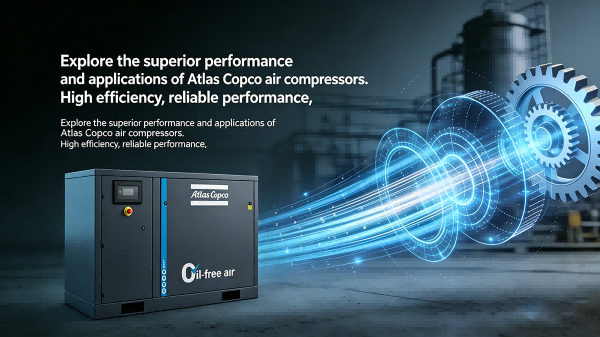
This article provides a comprehensive exploration of Atlas Copco air compressors. It begins by introducing the brand history and global market position of Atlas Copco, as well as the basic concepts and core applications of air compressors. It then elaborates on the characteristics and applicable fields of its four major product series (screw, piston, mobile, and oil-filtered air compressors), deeply analyzing the technological advantages and innovative achievements of these products in high-efficiency design, intelligent control systems, and noise control. Next, it outlines the application scenarios of air compressors in various fields such as industrial manufacturing, construction, food and beverage, and medical, showcasing their wide applicability. It also introduces Atlas Copco's comprehensive after-sales service system, including installation, commissioning, maintenance, and repair. Furthermore, it analyzes the current competitive landscape of the air compressor market, Atlas Copco's market strategy, and future industry development trends and technological innovation directions. Finally, it provides a comprehensive evaluation of Atlas Copco air compressors and offers targeted purchasing advice and considerations. This article systematically presents the superior performance and core value of Atlas Copco air compressors, providing a comprehensive and practical reference for industry practitioners and potential buyers.
I. Overview of Atlas Copco Air Compressors
II. Atlas Copco Air Compressor Product Series
III. Technological Advantages and Innovations
IV. Application Scenarios of Atlas Copco Air Compressors
V. After-Sales Service and Support
VI. Market Competition and Future Outlook
VII. Conclusion
① Company History and Development
Atlas Copco was founded in Stockholm, Sweden in 1873 by Edvard Fränckel, a Swedish industrialist, politician, and senior official of the Swedish National Railways. Initially named "Atlas Copco," it primarily manufactured railway equipment, including railway carriages. In the 1880s, affected by the global economic recession, the company began to diversify, venturing into steel components, marine steam engines, and boiler manufacturing. In the early 20th century, its focus gradually shifted to internal combustion engines, pneumatic machinery, and compressors. By 1915, compressed air products accounted for 50% of the company's sales. In 1917, Atlas Copco merged with diesel engine manufacturer Diesels Motorer to form AB Atlas Diesel, further strengthening its power equipment manufacturing capabilities. After more than 150 years of development, Atlas Copco has become a leading global industrial equipment manufacturer, with businesses covering compressors, vacuum equipment, pumps, generators, and more. It operates in over 180 countries and regions worldwide, employing approximately 56,000 people as of the end of 2025, with annual revenue of SEK 168 billion. It is listed on the Nasdaq Stockholm Stock Exchange, and both its Class A and Class B shares are constituents of the OMX S30 index.
② Global Market Position and Influence
In the global air compressor market, Atlas Copco firmly holds a leading position, being one of the dominant international giants in the high-end market, with a global market share of approximately 22%, second only to Ingersoll Rand (approximately 18%), leading the industry's technological development and market structure. With its profound technological accumulation, superior product quality, and comprehensive service system, the company has established extremely high technological barriers and brand premiums in the high-end air compressor field, with an average product price exceeding 160,000 RMB per unit. Its influence is not only reflected in product sales but also in its leading role in technological innovation. It leads the world in technological strength in high-end fields such as oil-free air compressors, magnetic levitation centrifugal air compressors, and intelligent control systems, driving the industry towards energy conservation, intelligence, and green development, becoming the preferred brand for many large enterprises and high-end manufacturing sectors worldwide.
① What is an Air Compressor? An air compressor is a mechanical device that converts the mechanical energy of a prime mover (usually an electric motor) into gas pressure energy. It is a compressed air pressure generating device, similar in structure to a water pump. Its core function is to draw in atmospheric air, compress it, and output compressed air with a certain pressure and flow rate, providing power support for various equipment and production processes. Air compressors can be classified into three main categories according to their working principle: positive displacement, power (velocity or turbine), and thermal. They can also be classified into oil-free and oil-lubricated air compressors according to their lubrication method. Furthermore, they can be classified into stationary, mobile, and enclosed types. Among these, positive displacement air compressors (including screw and piston types) are currently the most widely used type on the market.
② Functions and Applications The core function of an air compressor is to generate compressed air. Compressed air, as a clean and convenient power source, is widely used in various industries and is an indispensable general-purpose device in modern industrial production. Its main applications include: power transmission, providing power to pneumatic tools (such as rock drills and pneumatic wrenches) and pneumatic actuators; gas transportation, used for filling and transporting chemical raw materials and hazardous liquids; drying and purging, removing impurities from inside equipment and drying product surfaces; pressurized storage, storing compressed air in air tanks to balance pressure fluctuations and ensure stable air supply; auxiliary processing, providing support in processes such as spraying, sandblasting, and welding. In addition, it can be used for special needs such as sterile gas supply and precision instrument driving in industries such as medical, food, and electronics.
① Product Features
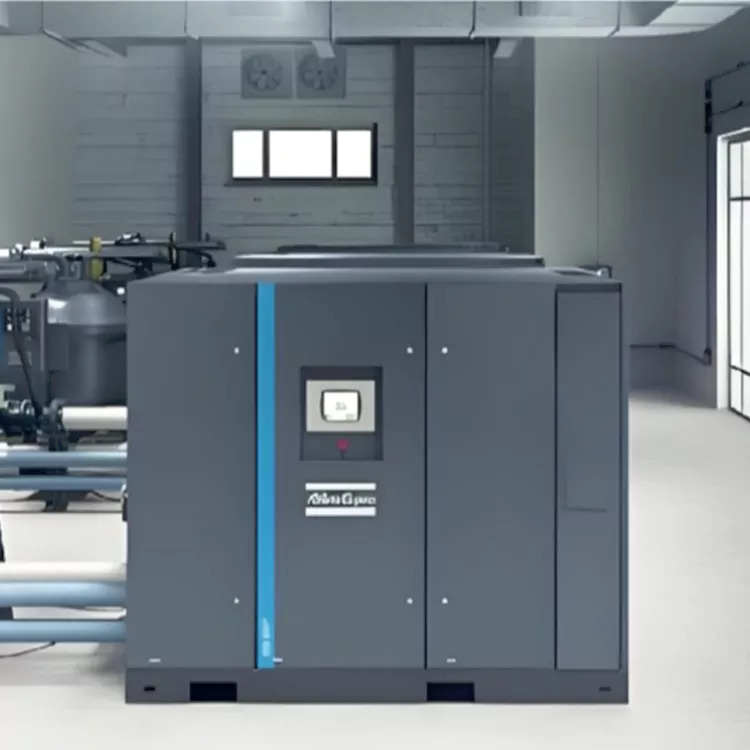
Screw air compressors are Atlas Copco's core product and the mainstream model in the current air compressor market, accounting for more than 70% of the global air compressor market share. Permanent magnet variable frequency (PMV) screw compressors account for 60% of screw compressor sales and have become the industry standard. Atlas Copco screw air compressors feature an advanced rotor profile design, paired with an IE5+ ultra-high-efficiency motor, resulting in significant energy savings of 15%-30% compared to traditional linear frequency models. Some two-stage compressor models can further improve energy efficiency by 8%-12%, making them the preferred choice for large factories. The products are characterized by stable operation, low noise, low vibration, and convenient maintenance. Their integrated design is compact, requiring minimal floor space, and allows for 24-hour continuous trouble-free operation. They have a long service life, and flexible adjustment of discharge volume and pressure adapts to various operating conditions. Equipped with a high-efficiency oil-gas separation system, they ensure extremely low oil content in the discharged compressed air, meeting the cleanliness requirements of high-end applications.
② Applicable Fields: Widely used in industrial manufacturing, electronics, automotive parts production, and machining, especially suitable for scenarios with high requirements for air supply stability, energy efficiency, and air quality, such as centralized air supply systems in large factories, precision instrument manufacturing, and automated production lines. They can also be used for auxiliary air supply needs in industries such as chemical and power.
Product Features
Atlas Copco piston air compressors are positive displacement compressors. They utilize a crankshaft and connecting rod mechanism to drive the piston in a cylinder, compressing air by changing the cylinder volume. They are simple in structure, have low manufacturing costs, are easy to operate and maintain, and are highly adaptable to various environments, operating normally in harsh conditions such as high temperature and high humidity. This type of compressor has a wide discharge pressure range to meet different pressure requirements. However, compared to screw air compressors, they have lower operating efficiency, higher noise levels, more noticeable vibration, and smaller discharge volume, making them suitable for low-power, intermittent operation scenarios. Currently, the market share of piston air compressors has shrunk to below 14%, mainly used in low-requirement, low-power operation scenarios.
Applicable Fields
Primarily used in small factories, individual businesses, and repair shops, such as small machinery repair, hardware processing, and small-scale spray painting operations. They can also be used as backup air supply equipment to temporarily provide compressed air when screw air compressors fail, meeting emergency needs.
Applicable Fields
Primarily used in small factories, individual businesses, and repair shops, such as small-scale machinery repair, hardware processing, and small-scale spray painting operations. 3. Portable Air Compressors
Product Features
Atlas Copco portable air compressors feature a portable design, equipped with a mobile chassis and towing device, allowing for flexible movement without fixed installation. They are suitable for outdoor and mobile work environments. The products are available in diesel and electric versions. The diesel-powered models use high-efficiency diesel engines, providing strong power and long-lasting range, suitable for outdoor environments without power supply. The electric-powered models are more environmentally friendly and energy-efficient, suitable for mobile work environments with power supply. This series of products features excellent pressure resistance, shock resistance, dustproofing, and waterproofing. Some models (such as the X28 and X-Air 1100-25) can provide high working pressures exceeding 20 bar and large air volumes exceeding 25 m³/min, capable of handling complex working conditions, and operating stably and reliably. They are also equipped with an intelligent control system for convenient operation, enabling remote monitoring and fault warnings.
Applicable Fields
Widely used in the construction and building industries, such as road construction, bridge construction, mining, and tunnel excavation, providing power for equipment like pneumatic rock drills and shotcrete machines. It can also be used in outdoor drilling, ship maintenance, slope reinforcement, and golf course well drilling. For example, the Atlas Copco X28 mobile air compressor can quickly drill to depths of over 300 meters in the mountainous terrain of South Korea, while the X-Air 1100-25 can be used for underwater reef blasting operations along the coast and for escorting navigation channel construction.
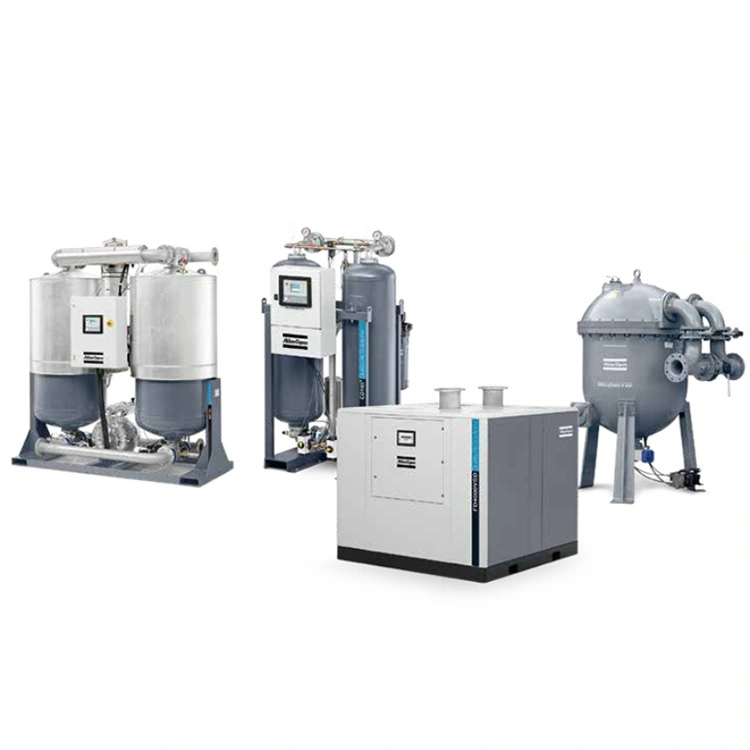
① Product Features Atlas Copco oil-free air compressors are designed for applications requiring extremely high compressed air cleanliness. Utilizing oil-free lubrication technology and a high-efficiency filtration system, they effectively remove oil, moisture, dust, and other impurities from compressed air, ensuring that the discharged compressed air meets food-grade and medical-grade standards. Some models can achieve zero oil emissions, meeting the stringent requirements of industries such as semiconductors and lithium batteries. This product series boasts outstanding energy-saving performance, with an annual growth rate exceeding 40%. The global market size is projected to reach approximately 8.5 billion yuan by 2025, with a penetration rate of 45%. It features stable operation, low noise, and long maintenance cycles. Manufactured using high-quality, corrosion-resistant, and high-temperature-resistant materials, it can meet the needs of specialized industries and can be integrated with waste heat recovery systems to further improve energy efficiency.
② Applicable Fields
Primarily used in industries with extremely high requirements for compressed air cleanliness, such as the food and beverage industry (for food processing, packaging, and beverage filling to prevent oil contamination), the medical industry (for driving medical devices and providing air for sterile environments), the electronics industry (for semiconductor manufacturing and precision electronic component processing to prevent dust and oil damage to equipment), and the lithium battery industry. It can also be used in high-precision instrument manufacturing and pharmaceutical fields.
① Energy-Saving Technology
Atlas Copco is a global leader in air compressor energy-saving technology, integrating energy-saving concepts throughout the entire product design and manufacturing process. Its core energy-saving technologies include permanent magnet variable frequency technology, which precisely controls the motor speed and automatically adjusts the exhaust volume according to air demand, avoiding energy waste and saving 15%-30% compared to traditional fixed-frequency models; two-stage compression technology, which improves compression efficiency through two-stage compression, further enhancing energy saving by 8%-12%, making it the preferred energy-saving solution for large factories; in addition, the company has developed the IE5+ ultra-high efficiency motor, which improves efficiency by 3%-5% compared to ordinary motors, while optimizing the rotor profile design. The fifth to tenth generation rotor profiles can improve efficiency by 2%-4% and reduce noise by 3-5dB, further enhancing energy saving. Simultaneously, the product is equipped with a waste heat recovery system, which can recover and utilize the heat generated during the operation of the air compressor for workshop heating, hot water supply, etc., with waste heat recovery efficiency exceeding 85%, achieving energy recycling and reducing the overall energy cost for enterprises.
② Operating Efficiency
Atlas Copco air compressors feature an integrated design with optimized internal structure, reducing airflow resistance and improving compression efficiency. High-quality wear-resistant materials are used in core components (such as rotors and pistons) to reduce wear and extend service life, while also reducing energy loss during operation. A high-efficiency intake filtration system ensures clean intake air, preventing impurities from entering the machine and affecting operating efficiency and equipment lifespan. Furthermore, precise pressure control prevents over-compression, further improving operating efficiency. Some high-end models achieve industry-leading power-to-weight ratios, with energy consumption per unit volume of exhaust gas significantly lower than the industry average, enabling long-term, efficient, and stable operation and reducing operating costs for businesses.
① Automated Management
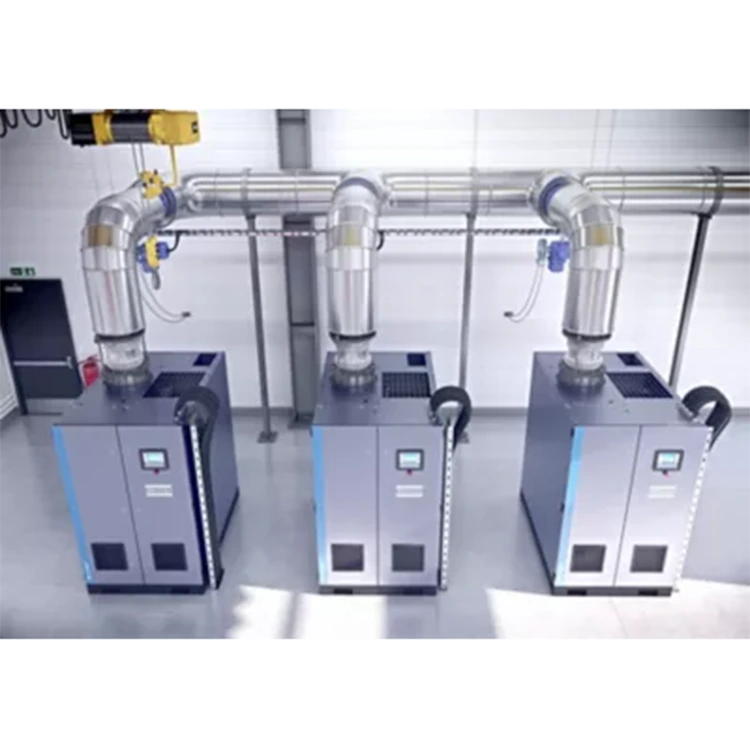
Atlas Copco air compressors are equipped with an advanced intelligent control system, using domestically produced chips and self-developed algorithms to replace imported PLCs, achieving fully automated management. It can automatically complete functions such as start-up, shutdown, pressure adjustment, fault diagnosis, and alarms, requiring no manual intervention and reducing manual operation costs and the risk of operational errors. The system can monitor the air compressor's operating parameters (such as exhaust pressure, exhaust temperature, motor speed, oil level, etc.) in real time, automatically adjusting the operating status according to air demand to ensure stable air supply pressure and avoid pressure fluctuations affecting production. Simultaneously, the system has automatic loading and unloading functions; when there is no air demand, the air compressor automatically enters an unloading state, reducing energy consumption and achieving energy-saving operation. Furthermore, the intelligent control system can achieve coordinated control of multiple air compressors, rationally allocating the operating load of each device according to total air demand, improving overall operating efficiency.
② Remote Monitoring Function
Relying on the Internet of Things (IoT) and 5G+edge computing technology, Atlas Copco air compressors achieve remote monitoring functionality, with a 10-fold increase in response speed. Users can view the air compressor's operating status and parameter data in real time through computers, mobile phones, and other terminal devices, and remotely control the air compressor's start-up, shutdown, parameter adjustments, and other operations without on-site supervision, facilitating centralized management of multiple air compressors in multiple locations. Meanwhile, the system features fault early warning and remote diagnostic functions, enabling real-time monitoring of equipment malfunctions, early alarm signals, and automatic analysis of fault causes to provide maintenance suggestions, reducing downtime and improving equipment availability and reliability. Furthermore, the remote monitoring system records equipment operating data and generates operating reports, providing data support for energy consumption analysis and equipment maintenance, helping companies optimize operating plans and reduce operating costs.
① Silent Design: Atlas Copco air compressors are designed with noise control in mind, employing a silent structural design and optimizing internal airflow channels to reduce noise generated by airflow impact. Simultaneously, noise reduction treatments are applied to core components such as the motor and compressor, using low-noise motors and vibration damping devices to reduce vibration noise during operation. In addition, the product is equipped with a soundproof enclosure with a sealed design, effectively blocking noise transmission. The operating noise of some screw air compressors can be controlled below 75dB, far below the industry average, making them suitable for scenarios with high noise requirements (such as the medical industry, food industry, and factories near office areas). ② Application of Noise Reduction Materials
During the product manufacturing process, Atlas Copco selects high-quality noise reduction materials, such as sound insulation cotton and vibration damping rubber, to wrap and protect the air compressor's body, pipes, and soundproof enclosure, further absorbing noise and reducing vibration. The sound insulation cotton is made of high-density, high-sound-absorbing material, effectively absorbing mid-to-high frequency noise generated during equipment operation; vibration damping rubber is used at the connection points between the motor, compressor, and chassis to reduce vibration transmission and lower structural noise. Through silent design and the rational application of noise reduction materials, Atlas Copco air compressors not only meet environmental protection requirements but also improve the working environment for operators and enhance the production experience for businesses.
Industrial manufacturing is the core application area for Atlas Copco air compressors, covering multiple sub-sectors such as machining, automotive manufacturing, electronics manufacturing, hardware processing, and building materials. In machining, air compressors provide power support for CNC machine tools, machining centers, and pneumatic tools for processes such as drilling, cutting, and grinding of parts. In automotive manufacturing, they are used for processes such as stamping, welding, and painting of automotive parts, and also provide power to pneumatic actuators in automated production lines. For example, an automotive parts manufacturer in Greenville, South Carolina, uses Atlas Copco E-Air V1100 electrically driven mobile air compressors to ensure smooth production and avoid downtime affecting production schedules. In electronics manufacturing, oil-filtered air compressors (oil-free air compressors) provide clean compressed air for semiconductor manufacturing and precision electronic component processing, preventing dust and oil from damaging equipment and products. In the building materials industry, they are used in the production processes of tiles, glass, and other products, providing auxiliary support such as drying and purging.
The construction and building sector is the primary application area for Atlas Copco mobile air compressors, encompassing various engineering types including road construction, bridge construction, mining, tunnel excavation, and slope reinforcement. In road and bridge construction, air compressors power pneumatic rock drills, shotcrete machines, and jackhammers for rock breaking and concrete spraying. In mining, they are used for rock drilling and ore crushing, improving construction efficiency. In tunnel excavation, they provide stable compressed air to pneumatic equipment inside the tunnel, ensuring smooth excavation operations. For example, in the Mt. Centis Tunnel project in the Alps, air compressors were used to power pneumatic rock drills, significantly shortening the construction period. In slope reinforcement, the Atlas Copco X28 mobile air compressor improves operational efficiency, reliability, and compliance, and is widely used in slope reinforcement and seismic retrofitting projects at residential construction sites in mountainous regions such as Gyeonggi Province, South Korea.
Industry The food and beverage industry has extremely high requirements for the cleanliness of compressed air. Atlas Copco oil-filtered air compressors (oil-free air compressors) have become the preferred equipment in this industry due to their zero oil emissions and high cleanliness. In food processing, compressed air is used for mixing, packaging, and conveying food, ensuring that the food is not contaminated by oil or dust. In beverage bottling, it is used for cleaning, filling, and capping beverage bottles, providing clean power support and preventing beverage contamination. In food preservation, compressed air is used for vacuum packaging, extending the shelf life of food. Furthermore, the quiet design and energy-saving advantages of Atlas Copco air compressors also meet the environmental protection requirements of the food industry, reducing the impact on the production environment.
The medical industry has extremely stringent requirements for the cleanliness and stability of compressed air. Atlas Copco oil-filtered air compressors (oil-free air compressors) can provide sterile, oil-free, and dry compressed air, and are widely used in various departments of hospitals. In operating rooms, compressed air powers medical equipment such as anesthesia machines and ventilators, providing respiratory support to patients. In laboratories, it powers precision testing instruments, ensuring accurate results. In wards, it provides auxiliary power to oxygen delivery systems, guaranteeing oxygen supply to patients. Furthermore, Atlas Copco air compressors operate stably and quietly, minimizing interference with the medical environment and meeting the specific requirements of the medical industry.
In addition to the main fields mentioned above, Atlas Copco air compressors are also widely used in other specialized fields, such as aerospace, chemical, new energy, ship maintenance, and water services. In the aerospace field, it provides high-precision, high-cleanliness compressed air for the manufacturing and testing of aircraft components. In the chemical industry, it is used for the transportation of chemical raw materials and the stirring of reaction vessels, possessing corrosion resistance and high-temperature resistance, adapting to the harsh environment of the chemical industry. In the new energy field, it provides clean compressed air for industries such as lithium batteries and photovoltaics, supporting the development of the new energy industry. In the field of ship maintenance, Atlas Copco mobile air compressors, with their high precision, high efficiency, and durability, can operate stably even in complex coastal environments, and are used for high-end ship maintenance operations such as superyacht retrofitting. In the water sector, Atlas Copco hydraulic power units, in conjunction with rock breakers, have won recognition from customers in multiple fields such as water, power, and municipal sectors with their "zero failure" performance. Their mobile air compressors can also be used for groundwater drilling, providing reliable water supply support for communities, industries, and golf courses.
Atlas Copco provides professional installation and commissioning services. With an experienced professional installation team, we can develop customized installation plans based on the customer's site environment and air usage needs, ensuring the air compressor is installed in a reasonable location and the piping layout is scientific, avoiding any impact on equipment efficiency and lifespan due to improper installation. After installation, professional technicians will conduct a comprehensive commissioning of the air compressor, including pressure regulation, speed calibration, and control system testing, ensuring that all equipment parameters meet design standards and operate normally. Simultaneously, technicians will explain the basic operation and precautions of the equipment to the customer's operators, helping them quickly master the equipment's usage.
To extend the service life of the air compressor and ensure long-term stable operation, Atlas Copco provides customers with comprehensive maintenance and care plans. Customized maintenance plans are developed based on the equipment's operating time and usage conditions, including regular inspections, component replacement, oil changes, and cleaning maintenance. The company has a professional maintenance team providing on-site maintenance services, promptly replacing worn parts (such as filters, oil filters, and seals), checking the equipment's operating status, identifying potential faults and addressing them in a timely manner to prevent escalation. In addition, the company offers a maintenance reminder service, monitoring the equipment's operating status in real time through a remote monitoring system. When the equipment reaches its maintenance cycle, the company promptly reminds customers to perform maintenance, ensuring the equipment is always in optimal operating condition. Atlas Copco also offers different levels of warranty services, with mainstream models offering a 5-year warranty and high-end energy-saving models offering a 10-year warranty, further protecting customer rights.
Atlas Copco has established a comprehensive FAQ system, providing detailed solutions to problems customers may encounter during equipment use (such as unstable pressure, excessive noise, fault alarms, excessive energy consumption, and excessive oil content). Customers can access these solutions through the official website, customer service hotline, and remote monitoring system. Meanwhile, the company's customer service team is available 24/7 to provide timely consultation services, quickly providing solutions to customer questions and helping customers resolve difficulties encountered during equipment use. For complex issues, the customer service team will arrange for professional technicians to provide on-site assistance, ensuring that customer production is not affected.
Analysis Atlas Copco always prioritizes customer needs and values customer feedback. Through questionnaires, customer visits, online consultations, and other methods, the company collects customer feedback on product performance and service quality, continuously optimizing product design and service systems. The company has also compiled a large number of successful customer cases covering various industries. For example, the Chinese drilling industry uses the X-Air 1300-35 mobile air compressor to achieve efficient operation and reduce the carbon footprint of projects; Yeosu Integrated Groundwater Company in South Korea uses the X28 mobile air compressor to quickly drill to depths of over 300 meters in mountainous and hard rock formations to meet groundwater supply needs; Pendennis Vilanova used Atlas mobile air compressors in its superyacht renovation project, which maintained stable operation even in complex coastal environments, earning high praise from the customer. Through customer case studies, we provide references for other customers, helping them better select air compressor products and solutions that suit their needs.
The current global air compressor market has formed a three-tiered competitive landscape: domestic brands are rising, foreign companies are maintaining their high-end positions, and small and medium-sized manufacturers are being rapidly eliminated. Atlas Copco, as a first-tier international giant, faces competitive pressure from both domestic and international companies. Major international competitors include Ingersoll Rand and Sullair, which also possess deep technological expertise and extensive global market presence, competing with Atlas Copco in the high-end air compressor sector. Ingersoll Rand holds approximately 18% of the global market share, second only to Atlas Copco. Both companies have advantages in technological innovation, product quality, and brand influence.
Faced with fierce market competition, Atlas Copco has formulated a differentiated market strategy, focusing on the high-end market to consolidate its technological advantages and brand premium, while also catering to the mid-to-low-end market to expand its market coverage. In terms of product strategy, we will continue to increase investment in technological innovation, focusing on the research and development of high-end products such as oil-free air compressors, magnetic levitation centrifugal air compressors, and intelligent air compressors, strengthening the energy-saving, intelligent, and cleanliness advantages of our products to widen the gap with competitors. In terms of pricing strategy, we will implement high-end pricing for the high-end market to reflect the technological and brand value of our products, while launching cost-effective products for the mid-to-low-end market to meet the needs of small and medium-sized enterprises. In terms of channel strategy, we will improve our global sales and service network, deeply cultivating 30 core provinces and 300 prefecture-level cities in China, establishing a four-tier channel system, and establishing 5 overseas warehouses and 10 service centers in Southeast Asia, the Middle East, and Europe to achieve localized inventory, localized service, and localized after-sales support, enhancing customer experience. In terms of service strategy, we will strengthen our after-sales service system, providing comprehensive installation, commissioning, maintenance, and repair services, and launching long-term warranty plans to enhance customer loyalty. Simultaneously, we will actively engage in cooperation and mergers and acquisitions to integrate industry resources and expand market share.
Over the next 3-5 years, the global air compressor industry will exhibit a trend of steady growth, structural adjustment, and overseas expansion. The market size is projected to exceed 100 billion yuan in 2027, with a growth rate of 5%-7%, and reach over 120 billion yuan by 2030, with an average annual growth rate of 6%, entering a mature growth phase. In terms of product structure, permanent magnet variable frequency compressors will accelerate their replacement of fixed frequency compressors, accounting for 80% by 2028; demand for oil-free air compressors will continue to surge, accounting for 35% by 2030, with high-end manufacturing achieving 100% oil-free operation; the proportion of centrifugal air compressors will increase to 18%, with strong demand in new energy, chemical, and power sectors. Among these, the commercialization of magnetic levitation centrifugal air compressors will accelerate in 2026, achieving energy savings of 30%+ and annual electricity cost savings of 700,000+ yuan per unit, and will gradually become widespread in medium-sized factories. In terms of technological development, energy conservation, intelligence, and greening will become core trends. IoT+AI intelligent systems will be widely adopted, with intelligent models accounting for 90% by 2028, and unmanned air compressor stations becoming mainstream. Regarding market layout, industry concentration will continue to increase, with the CR10 (top 10 companies' market share) reaching over 50% by the end of 2026 and 60% in the next three years, forming a dominant pattern of "3 leading domestic companies + 2 foreign giants." Meanwhile, overseas markets will become an important growth driver, with exports accounting for 50% by 2030, focusing on Southeast Asia, the Middle East, Latin America, and Africa. In terms of business models, there will be a shift from the traditional "equipment sales" to "energy conservation + intelligence + services." EMC (Energy Management Contract), leasing, and shared air compressor station models will develop rapidly, with EMC accounting for 20% of revenue by 2030, and the leasing market reaching over 20 billion yuan.
Directions In line with industry development trends, Atlas Copco's future technological innovation will focus on four core directions, breaking through bottleneck technologies and consolidating its leading position in the industry. First, we are iterating on energy-saving technologies, continuously developing the IE5+ ultra-high efficiency motor, optimizing rotor profiles, breaking through the 100-300kW medium-to-high power magnetic levitation centrifugal compressor technology, and developing a "screw + centrifugal" composite compressor model to further improve energy-saving effects. We are also strengthening waste heat recovery technology to improve energy utilization. Second, we are deeply upgrading our intelligent systems, standardizing 5G + edge computing, utilizing AI large-scale models to achieve fault self-diagnosis, self-repair, and self-optimization, and creating a unified "air compressor cloud platform" to achieve integrated remote operation and maintenance, energy efficiency analysis, carbon footprint tracking, and full life-cycle management, popularizing unmanned air compressor stations. Third, we are achieving full coverage of oil-free technology, increasing the pressure of oil-free screw compressors to 4.0MPa, expanding the power of oil-free scroll compressors to 30kW, promoting water-lubricated oil-free technology to reduce costs and meet the needs of different high-end fields. Fourth, we are developing green and low-carbon technologies, using recycled materials, low-energy manufacturing, and clean energy to reduce the overall carbon footprint of the machine, developing a high-pressure (70MPa) hydrogen-powered dedicated air compressor, and supporting new energy hydrogen refueling stations to contribute to the construction of zero-carbon factories.
As a leading brand in the global air compressor industry, Atlas Copco has, with over 150 years of development, secured a significant position in the global market and become a benchmark enterprise in the high-end air compressor field, thanks to its profound technological accumulation, comprehensive product series, superior product performance, and excellent after-sales service. Its products cover four major series: screw, piston, mobile, and oil-free, catering to the needs of different working conditions and industries. They possess outstanding advantages such as energy saving, intelligence, stability, quiet operation, and cleanliness. In particular, its technological innovations in high-efficiency design, intelligent control systems, and noise control lead the industry towards energy conservation, intelligence, and green development. In market competition, Atlas Copco firmly holds a dominant position in the high-end market due to its technological barriers and brand premium, while also catering to the mid-to-low-end market through a differentiated market strategy. Its comprehensive after-sales service system provides customers with all-round support, enhancing customer loyalty. Overall, Atlas Copco air compressors excel in product performance, technological innovation, and service quality, making them a top choice for businesses seeking air compressors. They provide stable, efficient, and energy-saving compressed air solutions, helping businesses reduce operating costs and improve production efficiency.
When purchasing Atlas Copco air compressors, customers should consider their own air consumption needs, usage scenarios, budget, and other factors to select the appropriate product type and model. First, clearly define your air requirements, including exhaust volume, exhaust pressure, and air cleanliness. For example, the food, medical, and electronics industries should prioritize oil-free air compressors; mobile air compressors should be chosen for outdoor operations; and screw air compressors (especially two-stage compression, permanent magnet inverter models) should be selected for centralized air supply in large factories. Second, choose the appropriate model based on the usage scenario. For example, models with excellent protective performance should be selected for high-temperature, high-humidity, and dusty environments, while quiet models should be selected for noise-sensitive scenarios. Third, consider budget factors and balance product performance and price. For high-end needs, flagship models can be selected, while mid-range models can be selected for those seeking better value for money. Avoid blindly pursuing high-end models, which can lead to wasted costs.
In addition, the following points should be noted when purchasing: First, choose an authorized Atlas Copco dealer to ensure the product is genuine and avoid purchasing counterfeit or substandard products, while also guaranteeing after-sales service; second, pay attention to the product's warranty period and after-sales service policy, prioritizing dealers and products with long warranty periods and comprehensive after-sales service; third, emphasize the installation and commissioning of the equipment, ensuring it is performed by a professional installation team to avoid affecting equipment operation due to improper installation; fourth, understand the equipment's maintenance and upkeep requirements, performing regular maintenance to extend the equipment's lifespan and reduce operating costs; fifth, in line with industry development trends, prioritize energy-saving and intelligent models, such as permanent magnet inverter and intelligent control models, laying the foundation for long-term energy-saving and efficient operation for the enterprise; sixth, refer to customer case studies in the same industry and choose suitable products and solutions based on your own needs to improve the rationality and practicality of your purchase.
A: Check if the oil level is normal, if the intake filter is clean, and if there are any leaks in the pipeline. Once the power supply voltage is stable, you can start the machine.
A: First, check if the intake filter is clogged, then check for pipeline leaks, and finally confirm that the pressure adjustment settings are appropriate.
A: No need to change the lubricating oil, only the filter element needs to be replaced regularly to ensure the cleanliness of the compressed air.
A: Depending on the model and load, the runtime is typically 8-12 hours. A spare fuel tank can be used to extend the operating time.



Copyright © 2025 Dechuan Compressor (Shanghai) Co., Ltd. All Rights Reserved.