
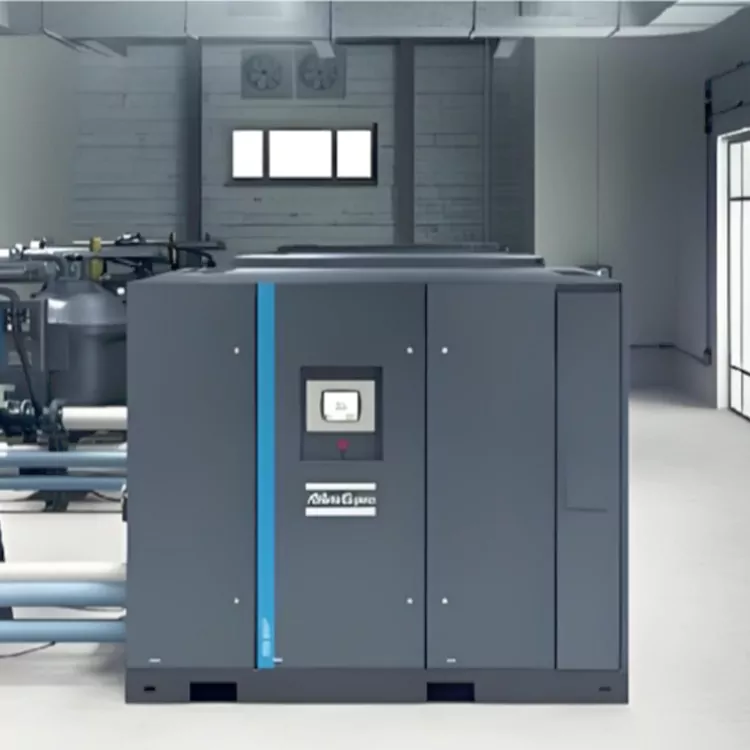
Dechuan provides the ZH Centrifugal Air Compressor for industrial applications that require high-volume, stable and oil-free compressed air. Designed for flow rates of 7,000 m³/h or higher and pressures up to 2 bar(g), this centrifugal solution combines efficient compression, adjustable airflow control and energy-saving technologies for demanding production environments.
Article Summary: A centrifugal compressor can be an important part of a high-volume compressed-air system when production requires reliable airflow with low oil contamination risk and controlled operating costs. The ZH series uses high-speed impellers, backward-curved impeller technology, adjustable guide vanes, efficient motors and a compact after-cooler. Its oil-free design is supported by a double-seal structure and Class 0 certification. This guide explains its working principle, technical characteristics, energy-saving features, application considerations and maintenance-related factors.
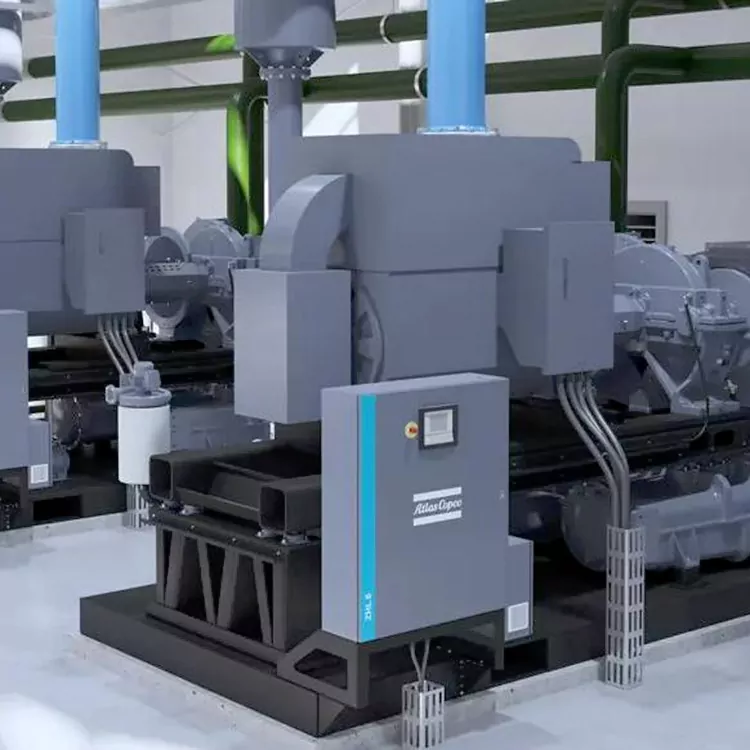
Table of Contents
1. How Does a ZH Centrifugal Air Compressor Work?
2. What Are the Key Technical Characteristics?
3. How Does the Compressor Reduce Energy Consumption?
4. Why Is Oil-Free Compressed Air Important?
5. Where Can This Compressor Be Used?
6. What Should Buyers Consider Before Selection?
8. Choose the Right Compressed-Air Solution
How Does a ZH Centrifugal Air Compressor Work?
The ZH centrifugal design uses dynamic compression rather than the positive-displacement principle commonly found in screw compressors. Air enters the compressor and is accelerated by a high-speed impeller. The resulting centrifugal action converts velocity into pressure, creating a continuous supply of compressed air.
Depending on the required pressure, centrifugal compressors can use different numbers of compression stages. For applications requiring pressure of up to 2 bar(g), a single-stage configuration can be sufficient. Higher pressure requirements may require two-stage or three-stage compression.
The basic compression process can be understood through three steps:
- Air intake: Atmospheric air enters the compressor system.
- High-speed acceleration: The impeller increases the velocity of the incoming air.
- Pressure conversion: Dynamic pressure is converted into useful compressed-air pressure before delivery to the process system.
This operating principle makes centrifugal technology particularly relevant to industrial plants with continuous and relatively high compressed-air demand.
What Are the Key Technical Characteristics?
When evaluating a centrifugal compressor, buyers should look beyond the nameplate power and consider airflow, pressure, air quality, control range and heat-management capability. The published ZH series information identifies several characteristics that directly affect system performance.
| Parameter | ZH Series Characteristic | Industrial Significance |
|---|---|---|
| Typical flow application | 7,000 m³/h or higher | Suitable for high-volume compressed-air demand |
| Pressure range highlighted | Up to 2 bar(g) / 29 psig | Suitable for low-pressure, high-flow processes |
| Compression configuration | Single, two-stage or three-stage options | Configuration can correspond to pressure requirements |
| Air quality | Oil-free, Class 0 certified | Supports applications where oil contamination must be minimized |
| Impeller design | Backward-curved impeller | Designed to support efficient operation across different models |
| Flow regulation | Adjustable guide vanes | Allows airflow to respond to changing demand |
| Motor options | Air-cooled and water-cooled | Provides flexibility for different installation environments |
Actual operating performance depends on the selected model, inlet conditions, discharge pressure, cooling conditions and system configuration. Therefore, final equipment selection should be based on measured process requirements rather than nominal flow alone.
How Does the Compressor Reduce Energy Consumption?
Energy consumption is one of the most important considerations in compressed-air system design because compressors can operate continuously for long production cycles. The ZH concept therefore focuses on reducing unnecessary energy use through aerodynamic design, airflow regulation and heat recovery.
Backward-Curved Impeller Design
The ZH series uses backward-curved impellers across different power and pressure configurations. This design approach is intended to provide efficient aerodynamic performance while allowing different impeller types to match varying operating requirements.
Adjustable Guide Vanes
Air demand is rarely constant throughout an industrial facility. Production schedules, equipment loading and process changes can cause airflow requirements to rise and fall. Adjustable guide vanes allow the compressor to regulate airflow according to changing demand.
According to the product information, adjustable imported guide vanes can provide energy savings of up to 9% compared with imported valves under the stated comparison conditions. Actual savings will depend on operating conditions, control strategy and the overall compressed-air system.
Efficient After-Cooling
The after-cooler is designed around compact construction, low approach temperature and low pressure drop. Maintaining appropriate compressed-air temperature while limiting pressure losses can contribute to better overall system efficiency.
Energy Recovery
Compression generates substantial heat. The product information states that an energy-recovery system can recover up to 94% of compression heat under suitable conditions. Recovered heat can be used to produce hot water for sanitation, heating or other production processes.
Why Is Oil-Free Compressed Air Important?
Compressed air can come into direct or indirect contact with products, packaging, instruments or production equipment. In these situations, oil contamination may create quality-control problems and additional filtration requirements.
The ZH series uses a double-seal structure incorporating an oil seal and an air seal. The design is intended to prevent lubricating oil from entering the compression path. The product page also states that the compressor has passed Class 0 zero-level oil-free certification.
Oil-free compressed air can be particularly relevant to industries where air purity is closely connected to product quality or process reliability, including:
- Food and beverage production
- Pharmaceutical manufacturing
- Electronics and semiconductor processes
- Textile production
- Chemical processing
- Industrial applications requiring clean process air
For any regulated application, buyers should confirm the required air-quality class, applicable standards and complete system configuration with the equipment supplier before purchase.
Where Can This Compressor Be Used?
The combination of high airflow, low-pressure operation and oil-free compressed air makes this type of centrifugal system suitable for applications where demand is continuous and substantial.
Typical application considerations include:
- Large manufacturing plants: Centralized compressed-air systems can distribute air to multiple production areas.
- Process-air systems: Oil-free air can support processes where contamination control is important.
- High-volume low-pressure applications: A centrifugal configuration can be considered where airflow requirements reach approximately 7,000 m³/h or more.
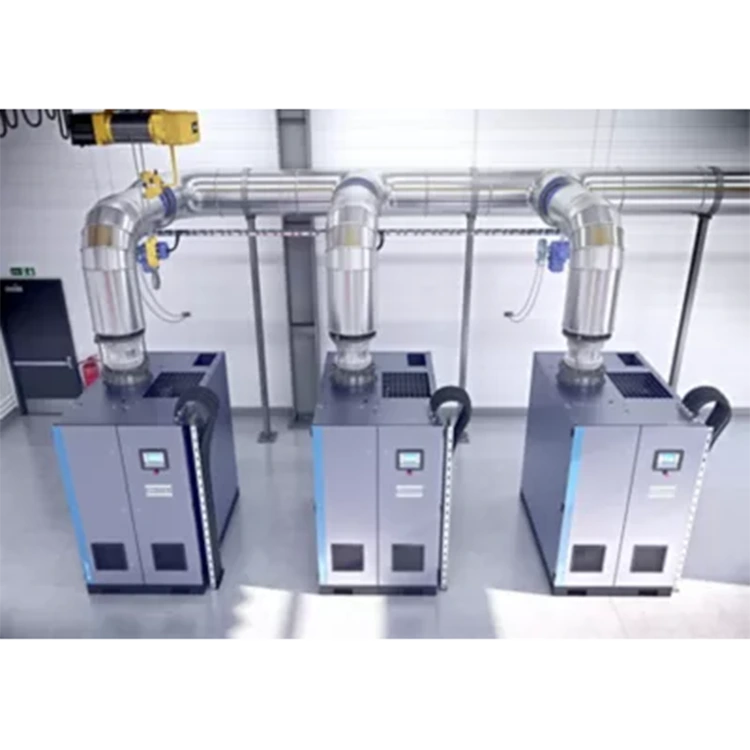
- Central compressor stations: Multiple compressors can be coordinated through central control systems to distribute workload.
- Heat-recovery applications: Facilities with a continuous demand for hot water may be able to reuse compression heat.
For plants with highly variable demand, compressor control is especially important. A system-level approach can help prevent unnecessary unloaded operation and improve how multiple machines share the workload.
What Should Buyers Consider Before Selection?
Choosing a centrifugal compressor should begin with the compressed-air profile rather than the equipment itself. Before requesting a quotation, buyers can prepare the following information:
- Required airflow: Determine average, peak and minimum air demand.
- Required pressure: Identify the actual process pressure and allowable pressure loss through downstream equipment.
- Air quality: Establish whether oil-free Class 0 air is required.
- Operating schedule: Consider annual operating hours and demand fluctuations.
- Cooling conditions: Check whether air-cooled or water-cooled equipment is more appropriate for the installation environment.
- Control strategy: Consider whether individual machine controls or centralized compressor management is required.
- Heat-recovery opportunities: Determine whether recovered compression heat can be reused economically.
- Maintenance requirements: Review access, service intervals and spare-parts support before finalizing the equipment.
A properly sized compressor can help avoid the problems associated with oversizing, unstable operation or insufficient capacity. For complex plants, an engineering assessment of the entire compressed-air network is recommended.
Frequently Asked Questions About ZH Centrifugal Air Compressor
What is the main advantage of a centrifugal air compressor?
A centrifugal air compressor is particularly suitable for high-volume compressed-air applications. It uses high-speed impellers to continuously accelerate and compress air, making centrifugal technology relevant to large industrial systems with substantial airflow requirements.
What pressure can a single-stage ZH centrifugal compressor provide?
The product information states that a single-stage configuration can generate air at pressure up to 2 bar(g). If a process requires higher pressure, two-stage or three-stage compression may be considered depending on the specific application.
Is the ZH compressor oil-free?
Yes. The published product information describes the ZH series as oil-free and states that it has passed Class 0 zero-level oil-free certification. Its double-seal design is intended to prevent lubricating oil from entering the impeller and compressed-air path.
How can adjustable guide vanes improve compressor operation?
Adjustable guide vanes regulate airflow in response to changing demand. This can help the compressor operate more efficiently when the production process does not require constant airflow. The actual energy benefit depends on operating conditions and the control strategy used.
Can compression heat be recovered?
Yes. The product information states that an energy-recovery device can recover up to 94% of compression heat under suitable conditions. Recovered heat can potentially be used for hot water, heating, sanitation or other compatible production requirements.
What information should I provide when requesting a ZH compressor quotation?
Provide required airflow, working pressure, operating hours, inlet conditions, cooling-water availability if applicable, air-quality requirements and demand fluctuations. These details allow the supplier to evaluate the appropriate configuration more accurately.
Choose the Right Compressed-Air Solution
For high-volume applications where oil-free air quality, energy efficiency and responsive airflow control matter, the ZH centrifugal platform provides a combination of centrifugal compression technology, backward-curved impellers, adjustable guide vanes, efficient cooling and optional energy recovery. Dechuan can help buyers evaluate the required airflow, pressure and operating conditions before selecting the appropriate configuration. If you are planning a new compressed-air system or upgrading an existing installation, learn more about the ZH Centrifugal Air Compressor and contact us for application-specific technical information and a suitable quotation.