Pharmaceutical manufacturing demands extremely rigorous compressed air quality and operational stability, as air purity and continuous supply are critical to product safety and consistent productivity. To comply with evolving global pharmaceutical quality standards, many European drug manufacturers have upgraded their on-site pneumatic infrastructure in recent years. As one of Europe’s most advanced pharmaceutical production and logistics hubs, Salutas has completed a comprehensive technical upgrade of its compressed air supply system at the Barleben facility in Germany. The renovation has greatly improved operational stability, energy efficiency and air cleanliness, fully meeting strict pharmaceutical benchmarks and high-end requirements for U.S. market entry.
The Barleben site features large-scale, high-intensity pharmaceutical manufacturing capabilities. Spanning 17,300 square meters, the plant operates round-the-clock with 24 tablet presses, 17 granulators and 10 coaters. It processes 300 active pharmaceutical ingredients and manufactures more than 15,500 types of finished pharmaceutical products. Supported by 24 automated packaging lines, the facility supplies goods to over 75 countries worldwide, handling 1,200 domestic delivery orders and 7,000 international orders on a daily basis. For such continuous, high-volume production, a stable, high-purity compressed air system serves as a foundational guarantee for standardized pharmaceutical operation.
Pharmaceutical-Grade Air Quality and Uninterrupted Supply Assurance
In pharmaceutical workshops, compressed air not only powers automated equipment but also directly participates in core processes such as tablet dedusting and specialized workshop air supply, making precise air quality control indispensable. As Christian Dörge, the project engineer in charge of the site’s pneumatic systems, explains, the Barleben plant strictly follows the ISO 8573-1 international air quality standard for all production procedures.
The upgraded system achieves Class 1 standards for residual particles and residual oil content, alongside Class 2 residual moisture performance, delivering a pressure dew point as low as -40°C. All compressed air used for equipment control, product dedusting and specialized production breathing air complies with pharmaceutical industry access criteria, effectively eliminating contamination risks caused by substandard air sources. Furthermore, the new system resolves the instability and unexpected shutdown issues of older equipment, preventing substantial production losses during continuous pharmaceutical manufacturing cycles.
Optimized Oil-Free Compression and Thermal Regenerative Drying Solution
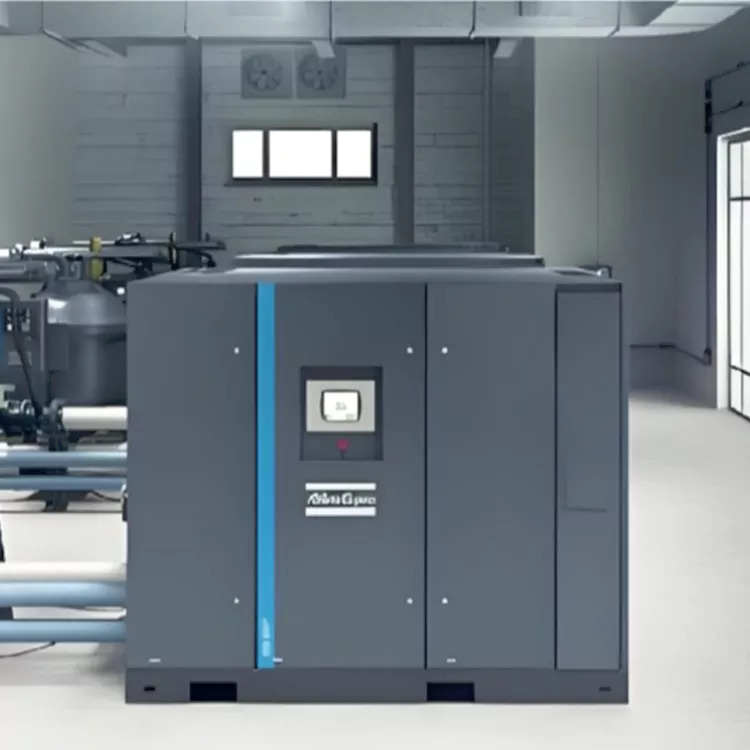
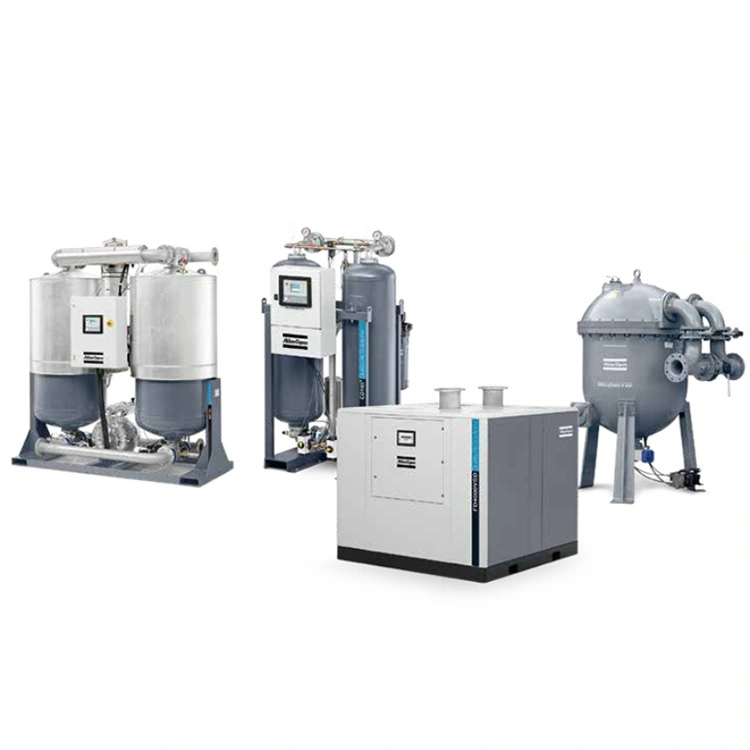
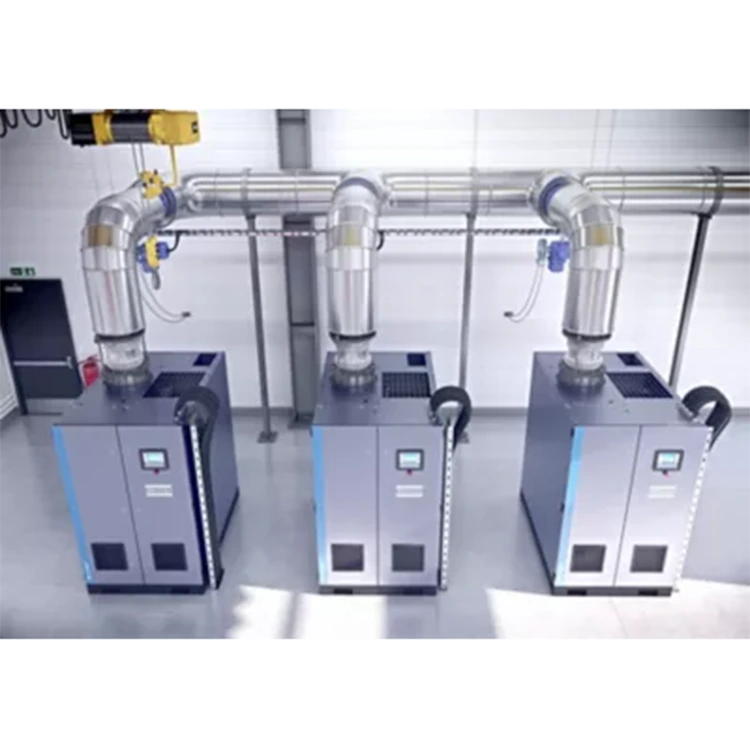
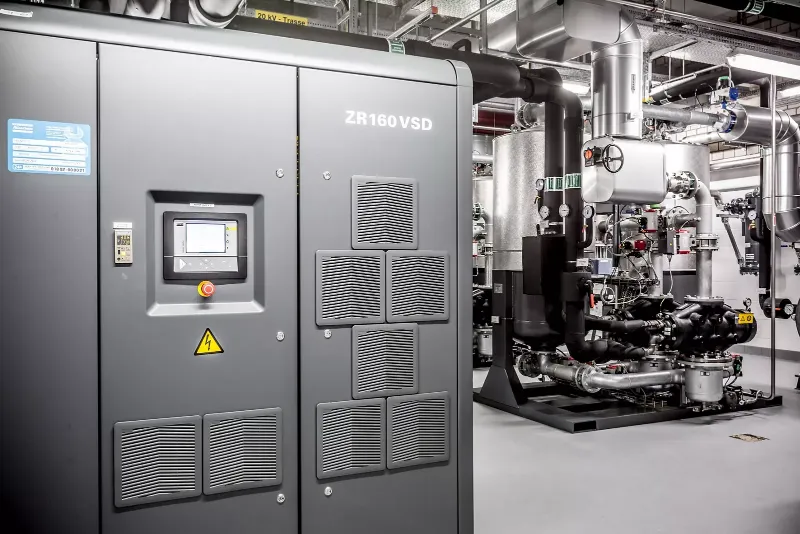
Finished in the autumn of 2015, the dual-station compressed air renovation adopts a modular, mutually redundant design integrated into a unified plant air network, delivering safe, full-site air supply with high efficiency. The first compressor station is equipped with water-cooled ZR-series oil-free screw compressors, paired with XD 850+ G ZP heat-of-compression desiccant dryers and a complete three-stage filtration system including particle, activated carbon and micro filtration. Customized for oil-free compression systems, the drying units feature low energy consumption and stable high-purity air output.
The secondary auxiliary station adopts ZT-series oil-free screw compressors, matched with BD 850+ ZP heat-regenerative adsorption dryers equipped with heaters and external blowers, as well as professional compressed air filtration units. Both stations combine variable-speed and fixed-speed compressor models, with one dedicated compressor and dryer reserved as standby redundancy for each station. The dual-station mutual backup structure significantly enhances system fault tolerance, enabling seamless switching during single-equipment failures and ensuring non-stop production.
Advanced Energy-Saving Technology Boosts Long-Term Production Benefits
For energy optimization, the upgraded system follows Novartis Group’s global compressed air management specifications and adopts an efficient heat-of-compression desiccant regeneration process. Compared with traditional setups, the optimized solution reduces compressor power consumption by approximately 180kW, achieving long-term energy savings and low-carbon operation while maintaining ultra-high air quality standards.
Industry insiders note that Salutas’ compressed air system upgrade offers a valuable reference for European generic pharmaceutical manufacturers. The optimized solution effectively balances pharmaceutical safety, continuous production reliability and industrial energy efficiency, providing a practical model for the standardized and intelligent upgrading of modern pharmaceutical production facilities.