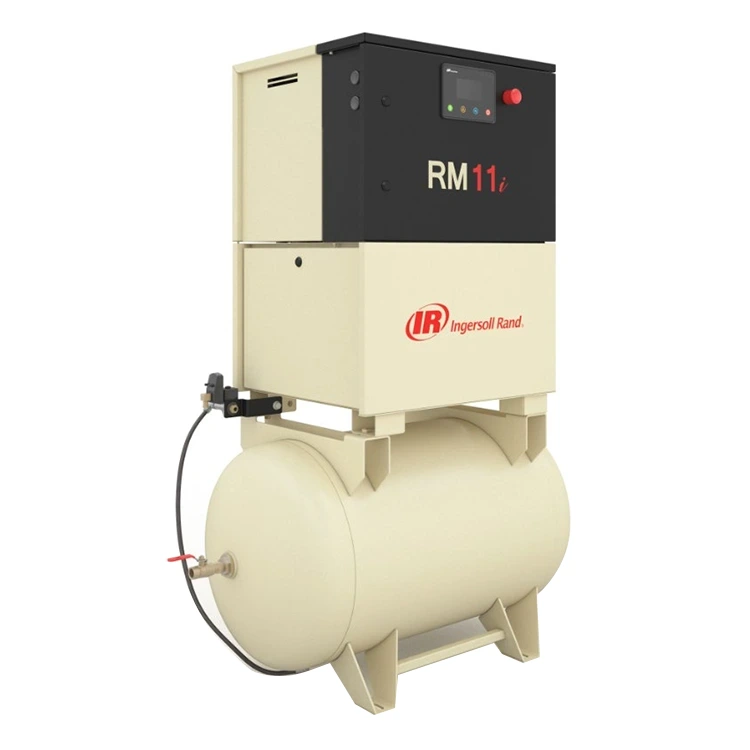
Compressed air is an essential power source in modern manufacturing, supporting pneumatic tools, automated production lines, packaging equipment, and numerous industrial processes. However, unstable air supply, excessive electricity consumption, frequent maintenance, and unexpected equipment downtime can significantly increase factory operating costs.
An RM Screw Air Compressor is designed to provide reliable compressed air for industrial applications through advanced rotary screw technology, optimized airend design, intelligent control, and energy-efficient motor options. The RM series from Dechuan Compressor (Shanghai) Co., Ltd. features oil-flooded rotary screw compressor models in the 7–22 kW range, with fixed-speed and variable-frequency configurations available within the product range.
This guide explains how RM screw air compressors work, how their major components support efficient operation, what factors influence energy consumption, and how businesses can select, operate, and maintain a suitable compressed air system.
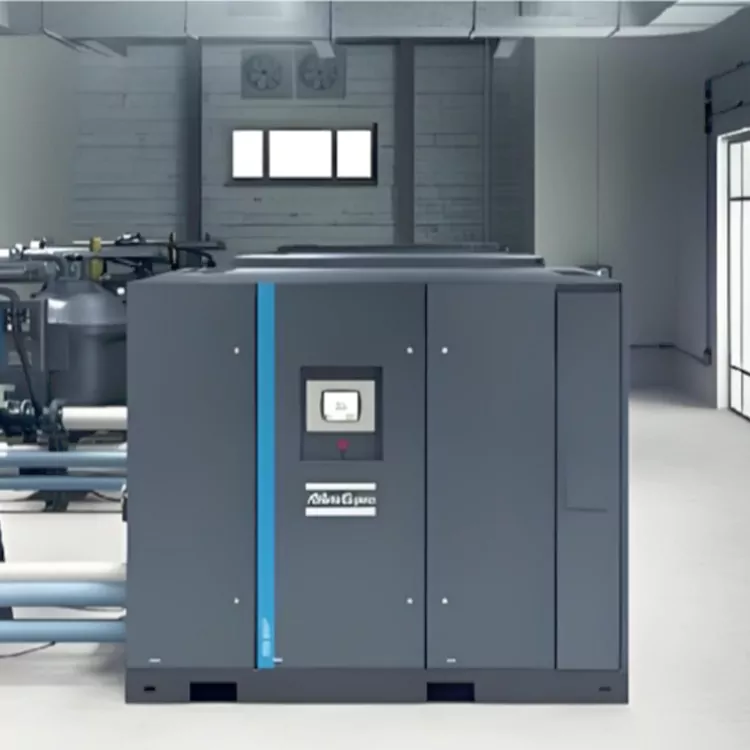
An RM Screw Air Compressor is an industrial compressed air machine that uses rotary screw technology to compress atmospheric air and deliver it at a required pressure. Unlike reciprocating compressors that rely on pistons moving inside cylinders, rotary screw compressors use two intermeshing rotors to continuously reduce the volume of trapped air.
The RM series is an oil-flooded rotary screw compressor range designed for industrial users who require a dependable compressed air supply. According to the product information provided by Dechuan Compressor (Shanghai) Co., Ltd., the series covers motor power ratings from 7 to 22 kW.
During operation, lubricating oil is introduced into the compression chamber. It helps seal clearances between the rotors, remove compression heat, and lubricate internal components. The compressed air then passes through an oil separation system before being delivered to the downstream air network.
Many factories need compressed air throughout the working day. A screw compressor is suitable for continuous industrial operation because its rotary compression process provides a steady air supply with relatively low pulsation compared with many reciprocating designs.
It can support applications that require consistent pressure, dependable airflow, and efficient operation across changing production schedules.
The operating principle of an oil-flooded rotary screw compressor is based on the continuous rotation of two precision-engineered screw rotors. As the rotors turn, they draw in atmospheric air, trap it between the rotor profiles and housing, and gradually reduce the available volume to increase pressure.
Atmospheric air enters the compressor through an intake filter. The filter captures dust and other airborne particles before the air reaches the compression chamber. Effective filtration helps protect internal components and maintain stable operating performance.
The intake air enters the airend, where the male and female rotors rotate in opposite directions. Air becomes trapped within the rotor grooves and is compressed as the available chamber volume decreases.
In an oil-flooded design, lubricating oil enters the compression chamber. It helps reduce internal leakage, lubricate moving surfaces, and absorb heat generated during compression.
The air-oil mixture flows into the separation system. Oil is separated from the compressed air and returned to the lubrication circuit, while the compressed air continues toward the outlet.
After separation and the relevant internal treatment stages, compressed air is supplied to the downstream system. Additional air dryers, filters, and storage tanks may be required depending on the application.
Modern screw compressors are designed to improve more than basic air production. Rotor geometry, motor efficiency, cooling structure, and intelligent control all influence electricity consumption and equipment reliability.
The airend is the core compression component. The RM series uses an upgraded main unit with optimized rotor profiles. According to the manufacturer's product information, this design can improve efficiency by up to 11% and increase air delivery by up to 11% compared with the previous generation under the stated comparison conditions.
Improved rotor geometry helps reduce unnecessary internal leakage and supports efficient air compression. This can contribute to lower operating costs when the compressor is correctly selected and operated.
Motor efficiency directly affects the electrical energy required to produce compressed air. The RM series product range includes IE3 fixed-speed motor technology and ECO-PM permanent magnet variable-frequency motor technology with an IE5 efficiency designation.
These configurations provide different operating characteristics. Fixed-speed models are generally suited to relatively stable air demand, while variable-frequency models can adjust motor speed according to changing requirements.
The RM series uses a Luminance controller designed to monitor operating parameters and support compressor management. Its functions include an intuitive touchscreen interface, operating information display, warning notifications, maintenance reminders, and remote management capabilities where the required connectivity is available.
Thermal management is important because excessive operating temperatures can affect lubrication, component life, and overall compressor reliability. The RM series product information describes a horizontally arranged, non-welded oil cooler designed to reduce deformation and leakage associated with thermal stress.
Electricity is often one of the largest expenses associated with industrial compressed air production. Even a small improvement in compressor efficiency can create meaningful savings when equipment operates for many hours each day.
The RM series combines several design features intended to reduce energy consumption and improve air production efficiency.
Improved airend geometry helps reduce internal losses and supports efficient compression.
IE3 fixed-speed and IE5 permanent magnet variable-frequency configurations address different operating requirements.
Operating data and control algorithms help manage pressure fluctuations and equipment operation.
Properly designed sealing connections help reduce compressed air losses within the equipment.
Efficient cooling supports stable operating temperatures and helps protect internal components.
Variable-frequency control can reduce unnecessary energy use when air demand fluctuates.
The manufacturer's RM series information indicates that its ECO-PM variable-frequency technology can help save approximately 12–30% in electricity costs, depending on operating conditions and the comparison baseline.
This figure should be treated as a product-range performance claim rather than a guaranteed saving for every installation. Actual results depend on load profile, pressure settings, operating hours, system leakage, motor configuration, and control strategy.
For example, a compressor with an average electrical input of 15 kW operating for 4,000 hours annually at an electricity tariff of $0.12 per kWh would have an estimated annual electricity cost of:
15 × 4,000 × $0.12 = $7,200
This is an illustrative calculation, not a specification or actual operating cost for a particular RM model.
Monitoring actual electrical consumption and compressed air output provides a more useful basis for evaluating energy performance than relying on motor nameplate power alone.
Understanding the main components of an RM screw air compressor helps maintenance teams identify potential problems and make informed purchasing decisions.
| Component | Main Function | Maintenance Consideration |
|---|---|---|
| Airend | Compresses incoming air through rotating screw elements. | Monitor temperature, noise, vibration, and operating condition. |
| Air Intake Filter | Removes airborne contaminants before compression. | Inspect and replace according to operating conditions. |
| Electric Motor | Provides mechanical power to drive the airend. | Check electrical connections, temperature, and operating status. |
| Oil Separation System | Separates lubricating oil from compressed air. | Monitor pressure differential and oil carryover. |
| Oil Cooler | Removes heat from circulating lubricating oil. | Keep cooling surfaces clean and inspect for leakage. |
| Oil Filter | Removes contaminants from circulating oil. | Replace at the recommended service interval. |
| Controller | Monitors operating parameters and manages compressor functions. | Check alarms, settings, and sensor readings. |
| Cooling Fan | Supports heat dissipation within the compressor system. | Check airflow, fan condition, and ventilation clearance. |
Component design and arrangement may vary by model and configuration. Buyers should review the applicable technical documentation before ordering replacement parts or planning maintenance procedures.
Compressed air is widely used across manufacturing industries because it offers a convenient way to power pneumatic equipment, control machinery, and support production processes.
Factories use compressed air for pneumatic cylinders, automated production equipment, material handling, and assembly tools. A reliable screw compressor helps maintain consistent air availability during production shifts.
Automotive and machinery manufacturers rely on compressed air for pneumatic tools, assembly operations, component cleaning, and certain coating processes. Stable pressure is important for maintaining repeatable equipment performance.
Compressed air supports packaging machinery, conveying systems, filling equipment, and pneumatic actuators. Applications involving direct or indirect product contact require an appropriate air treatment system and a clearly defined air quality specification.
Textile production and other light industrial operations use compressed air for pneumatic controls, machine movement, and automated processes. Correct compressor sizing helps prevent pressure drops during periods of high demand.
Electronic manufacturing facilities may use compressed air for equipment actuation, component handling, and selected cleaning processes. Where moisture, oil, or particles could affect production quality, downstream air purification must be selected carefully.
Maintenance workshops use compressed air for pneumatic tools, cleaning equipment, and general servicing. A properly configured compressor system helps provide convenient air access across multiple workstations.
Correct compressor selection is essential for controlling energy consumption and avoiding insufficient air supply. Purchasing a compressor based only on motor power can result in poor system performance if the actual airflow and pressure requirements are not considered.
Determine the total compressed air consumption of all connected equipment. Consider simultaneous operating demand, peak consumption, future production expansion, and potential leakage.
Airflow should be evaluated using the compressor's actual delivered capacity under the required operating conditions, rather than relying solely on theoretical displacement.
Identify the minimum pressure required by the production equipment. Account for pressure losses across pipes, filters, dryers, valves, and other components between the compressor and the point of use.
Operating at unnecessarily high pressure can increase energy consumption and may place additional stress on the compressed air system.
Observe how air consumption changes throughout the day. A factory with relatively stable demand may benefit from fixed-speed operation, while facilities with significant demand fluctuations may benefit from variable-frequency control.
A compressor running for long shifts has different energy and maintenance requirements from equipment used occasionally. Annual operating hours should be included when comparing total ownership costs.
Check available floor space, ventilation, ambient temperature, power supply, noise requirements, and access for maintenance. Proper installation conditions help prevent overheating and simplify servicing.
| Selection Factor | Information Required | Why It Matters |
|---|---|---|
| Motor Power | Required power range in kW | Helps narrow down suitable equipment models. |
| Air Delivery | Total demand in m³/min or CFM | Ensures adequate compressed air supply. |
| Working Pressure | Required operating pressure in bar or MPa | Ensures compatibility with production equipment. |
| Load Profile | Stable, intermittent, or fluctuating demand | Helps determine the appropriate control configuration. |
| Air Quality | Required moisture, oil, and particle levels | Determines downstream treatment requirements. |
| Operating Hours | Daily and annual operating time | Influences energy costs and maintenance planning. |
| Installation Environment | Temperature, ventilation, and available space | Supports safe and stable equipment operation. |
Fixed-speed and variable-frequency compressors provide different operating characteristics. Understanding the difference helps factories choose a configuration that matches their air consumption patterns.
A fixed-speed compressor operates at a relatively constant motor speed when running. Its output is managed through the compressor's loading and unloading control system.
This arrangement is often appropriate for production facilities with relatively stable compressed air consumption and predictable operating schedules.
A variable-frequency drive adjusts motor speed according to compressed air demand within its permitted operating range. When air consumption decreases, the compressor can reduce its output instead of continuously producing air at a higher rate than necessary.
The RM series offers ECO-PM permanent magnet variable-frequency technology with an IE5 motor efficiency designation, according to the product information.
| Comparison | Fixed-Speed | Variable-Frequency |
|---|---|---|
| Motor Speed | Generally constant during loaded operation | Adjusts according to demand |
| Air Output | Managed through loading and unloading | Can vary with motor speed |
| Suitable Demand | Relatively stable air consumption | Fluctuating air consumption |
| Control | Conventional pressure-based control | Variable-speed pressure control |
| Energy Performance | Depends on loading pattern and system design | Can reduce part-load energy consumption |
| Selection Priority | Stable output and operating requirements | Demand variation and energy optimization |
A variable-frequency model is not automatically more economical in every installation. Its benefits depend on the load profile, minimum speed limits, pressure settings, and the overall system design. A proper assessment should compare actual energy consumption across the expected operating cycle.
Choosing the compressor is only one part of building a reliable compressed air system. The air quality required at the point of use determines which downstream components are necessary.
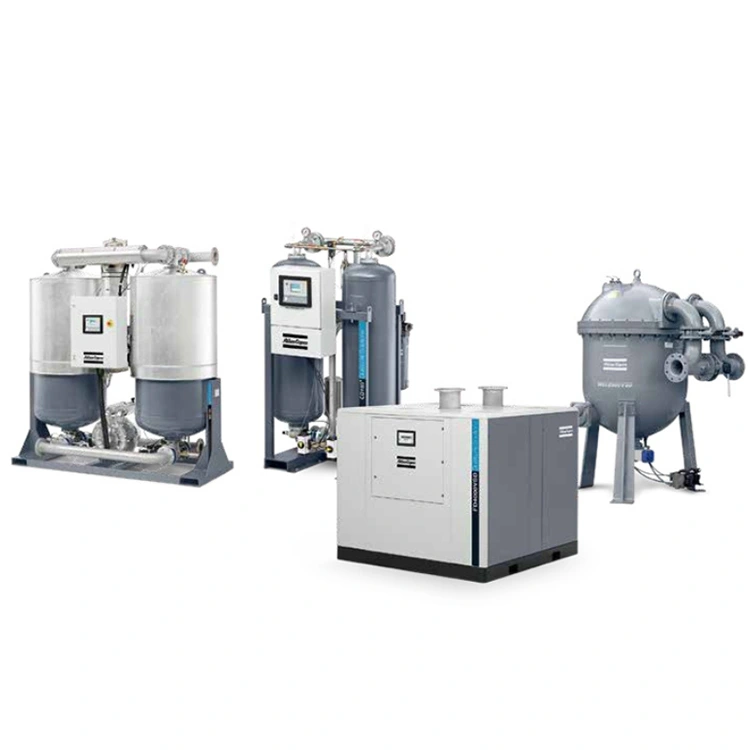
Compressed air contains water vapor. When air cools, moisture can condense inside pipelines and equipment. A refrigerated or desiccant air dryer may be required depending on the required pressure dew point and operating environment.
Filters remove different types of contaminants, including solid particles, oil aerosols, and other impurities, depending on their design and filtration rating. Filter selection should match the application and required air quality.
An air receiver stores compressed air and helps stabilize system pressure during short periods of changing demand. It can also reduce rapid compressor cycling when correctly sized and integrated.
Moisture collected in receivers, dryers, and filters must be discharged properly. Automatic drains help remove accumulated condensate while reducing the need for manual operation.
Proper installation and routine maintenance help preserve compressor performance, reduce unexpected shutdowns, and extend equipment service life.
| Maintenance Item | Recommended Inspection | Purpose |
|---|---|---|
| Air Intake Filter | Inspect condition and pressure differential. | Maintain adequate intake airflow. |
| Lubricating Oil | Check level, condition, and replacement schedule. | Protect internal moving components. |
| Oil Filter | Replace according to the maintenance schedule. | Maintain clean oil circulation. |
| Oil Separator | Monitor differential pressure and oil carryover. | Support effective oil separation. |
| Cooler | Inspect for dust accumulation and leakage. | Maintain efficient heat dissipation. |
| Drive System | Inspect coupling or belt condition as applicable. | Maintain reliable power transmission. |
| Controller | Review alarms and operating records. | Identify abnormal operating conditions early. |
Maintenance intervals should follow the manufacturer's instructions and be adjusted according to actual operating conditions. Dusty environments, high ambient temperatures, and long operating hours may require more frequent inspections.
Recognizing common compressor problems helps maintenance teams identify possible causes before they result in production interruptions.
| Problem | Possible Cause | Recommended Action |
|---|---|---|
| Insufficient Air Delivery | Blocked intake filter, air leakage, incorrect settings, or excessive demand. | Inspect intake components, check the distribution network, and verify demand. |
| High Operating Temperature | Blocked cooler, inadequate ventilation, or low oil level. | Check cooling airflow, oil level, and ambient conditions. |
| Excessive Oil Carryover | Damaged separator, unsuitable oil level, or internal system problems. | Inspect the separation system and follow manufacturer service procedures. |
| Frequent Loading and Unloading | Small receiver capacity, fluctuating demand, or control settings. | Review air demand, receiver sizing, and pressure settings. |
| Abnormal Noise or Vibration | Loose components, worn bearings, or drive alignment problems. | Stop the machine when necessary and arrange a technical inspection. |
| Excessive Energy Consumption | High pressure settings, leakage, poor load matching, or dirty filters. | Conduct an energy audit and review operating parameters. |
| Water in Compressed Air | Insufficient drying, drain failure, or inadequate condensate management. | Inspect the dryer, drains, filters, and downstream piping. |
Operators should avoid changing pressure settings or internal components without understanding the cause of the problem. Persistent alarms, overheating, or abnormal mechanical noise should be investigated by qualified service personnel.
Industrial buyers should evaluate the complete compressed air solution rather than focusing only on the initial purchase price. Electricity consumption, maintenance requirements, spare parts availability, and after-sales support all contribute to the total cost of ownership.
Request detailed information about motor power, rated pressure, delivered airflow, motor efficiency, cooling requirements, dimensions, and electrical configuration. Confirm that the selected model meets the actual production demand.
Ask for performance data under the intended operating conditions. Compare specific power consumption, load profile, and annual electricity costs rather than relying only on general energy-saving claims.
Determine whether the project requires a refrigerated dryer, desiccant dryer, precision filters, oil removal equipment, or an air receiver. These components may be essential to achieving the required air quality and pressure stability.
Check the availability of genuine filters, lubricants, separator elements, and other service components. Confirm recommended maintenance intervals and the support available for troubleshooting.
A qualified supplier should be able to help evaluate air demand, operating pressure, installation conditions, and suitable equipment configurations. Clear technical communication before purchasing can reduce specification errors and commissioning problems.
Dechuan Compressor (Shanghai) Co., Ltd. provides compressed air equipment and related solutions for industrial customers. Its RM screw air compressor range is designed around rotary screw compression technology, energy-efficient motor options, intelligent control, and practical maintenance considerations.
For businesses evaluating a new compressed air installation or upgrading existing equipment, discussing actual operating conditions with the supplier can help identify an appropriate configuration and avoid unnecessary equipment investment.
An RM screw air compressor supplies compressed air for industrial applications such as manufacturing, pneumatic tools, automated production lines, packaging machinery, and general factory operations.
According to the published RM series product information, the range covers 7–22 kW. Available configurations and detailed specifications should be confirmed with the supplier.
No. The RM series discussed in this article is an oil-flooded rotary screw compressor range. Lubricating oil is used during compression for sealing, lubrication, and cooling. Additional air treatment may be required for applications with strict oil-content requirements.
Fixed-speed models operate at a relatively constant motor speed during loaded operation, while variable-frequency models adjust motor speed according to air demand. The appropriate option depends on the factory's consumption pattern and energy requirements.
The manufacturer indicates potential electricity cost savings of approximately 12–30% for its ECO-PM variable-frequency technology. Actual savings depend on operating conditions, air demand, pressure settings, and the comparison system.
The airend is the core compression assembly. It contains the intermeshing screw rotors that trap and compress incoming air. Its geometry and operating condition directly influence airflow and compression efficiency.
Whether an air dryer is required depends on the moisture level acceptable for the application. Many industrial systems use refrigerated or desiccant dryers to prevent condensation and protect downstream equipment.
Maintenance intervals depend on the model, operating hours, ambient conditions, and air quality. Follow the manufacturer's maintenance schedule for oil, filters, separator elements, and other components.
Common causes include dirty cooling surfaces, insufficient ventilation, low lubricating oil levels, and unsuitable ambient conditions. The compressor should be inspected according to the manufacturer's troubleshooting procedures.
Provide the required airflow, working pressure, operating hours, load profile, air quality requirements, and installation conditions. These details help the supplier recommend a suitable configuration.
Air leakage wastes energy because the compressor must produce additional compressed air to compensate for lost pressure and volume. Regular leak detection and repair can improve overall system efficiency.
Prepare your required airflow, operating pressure, motor power preference, electrical supply, working schedule, installation environment, and downstream air treatment requirements. Providing this information makes technical evaluation more accurate.
An RM Screw Air Compressor can support industrial productivity by providing a reliable source of compressed air for manufacturing and other demanding applications. Its rotary screw airend, efficient motor configurations, intelligent controller, and optimized internal structure are designed to address important operating challenges such as energy consumption, equipment reliability, and maintenance management.
However, achieving good performance requires more than selecting a compressor with the right motor power. Airflow demand, operating pressure, load variation, compressed air quality, installation conditions, and maintenance planning must all be considered as part of the complete system.
For manufacturers, factory operators, equipment distributors, and industrial purchasing teams, working with an experienced compressed air supplier can help simplify equipment selection and support long-term operating efficiency.
Dechuan Compressor (Shanghai) Co., Ltd. provides industrial compressed air solutions designed to support different production requirements.
Whether you need an RM screw air compressor for manufacturing, automated production, packaging, or general industrial applications, choosing the right configuration is essential for reliable performance and efficient operation.
Contact us today to discuss your required airflow, working pressure, motor configuration, and project requirements. Our team can help you explore a suitable compressed air solution for your business.
Contact Us


Copyright © 2025 Dechuan Compressor (Shanghai) Co., Ltd. All Rights Reserved.